Rethinking Animal Testing
Why It Is More Than Just a Cosmetic Issue
Lately, Singapore has been facing a spike in animal cruelty cases and it has got me thinking, what does cruelty really mean? Most of us picture abuse as obvious physical harm, like hitting or neglecting pets. But honestly, cruelty is way more complicated than that.
It includes abandonment, illegal wildlife trade, animals falling from high-rise buildings and something that does not get talked about enough: animal testing.
What Is Animal Testing Anyway?
Basically, animal testing means using animals - rats, mice, rabbits, fish, and sometimes dogs or monkeys — in experiments. This happens across lots of industries: medicine, chemicals, cosmetics and more.
While animal testing helps with important medical breakthroughs like understanding diseases like cancer and even helped space programs take off, these are not just “necessary sacrifices.” They are serious ethical issues. And here is the thing: it is not just an old practice that’s dying out. Animal testing is still happening, even in areas where cruelty-free alternatives exist with technology moving fast, like AI drug testing and robotic space simulation.
https://www.nasa.gov/history/a-brief-history-of-animals-in-space/
In 1957, amid the Cold War and a fierce space race, the Soviet Union launched Sputnik 2. Aboard it was Laika, a stray dog plucked from the streets of Moscow. She was chosen for her calm demeanor and small size, qualities the scientists believed would make her suitable for space travel. With no means of returning her safely, Laika's mission was known to be a one-way journey.
At the time, Soviet authorities claimed she survived for several days in orbit. But decades later, it was revealed that Laika died within hours of launch, succumbing to overheating and stress, not the peaceful, pre-planned death officials had initially reported. According to The Guardian, the spacecraft's cooling system failed, sealing Laika’s fate far sooner than expected.
Laika’s flight was the first to send a living creature into Earth orbit, marking a monumental step in space science. Yet, her death sparked global ethical debates. Many questioned the morality of sending animals on missions with no hope of survival. Although Laika did not return, her mission laid the groundwork for human spaceflight and the development of life-support systems in spacecraft.
Six years later, in 1963, France launched a different kind of pioneer into space, a black-and-white cat named Félicette. Often overshadowed by other spacefarers, Félicette holds a unique place in history as the first and only cat sent into space.
Unlike Laika, Félicette’s journey had a more hopeful outcome. She was launched aboard a suborbital flight and successfully returned to Earth, surviving the experience. Electrodes implanted in her brain monitored her neurological responses, contributing valuable data to space medicine.
But Félicette’s story, too, ended in tragedy. Despite surviving her mission, she was euthanized two months later so that scientists could examine her brain for potential damage caused by space travel. Her sacrifice, though less publicized at the time, was no less significant.
For many years, Félicette remained a forgotten figure in the annals of space history. But in 2019, a long-overdue tribute was made. A bronze statue of Félicette was unveiled at the International Space University in France, honoring her role and ensuring she would be remembered as more than just an experiment.
Laika and Félicette were more than passengers on scientific missions, they were pioneers. Their lives and sacrifices reflect both the triumphs and the ethical dilemmas of space exploration. Today, their stories continue to remind us of the costs of discovery and the importance of compassion, even as we reach for the stars.
Beyond Beauty: Animal Testing in Research
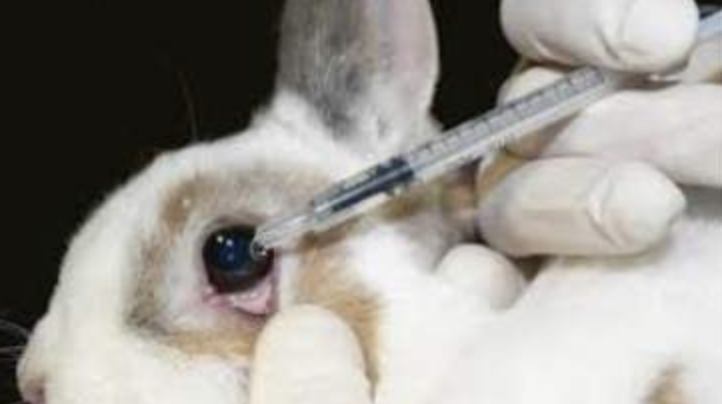
When people hear “animal testing,” they often imagine makeup being tested on bunnies. But it is much more invasive, especially in medical and scientific research.
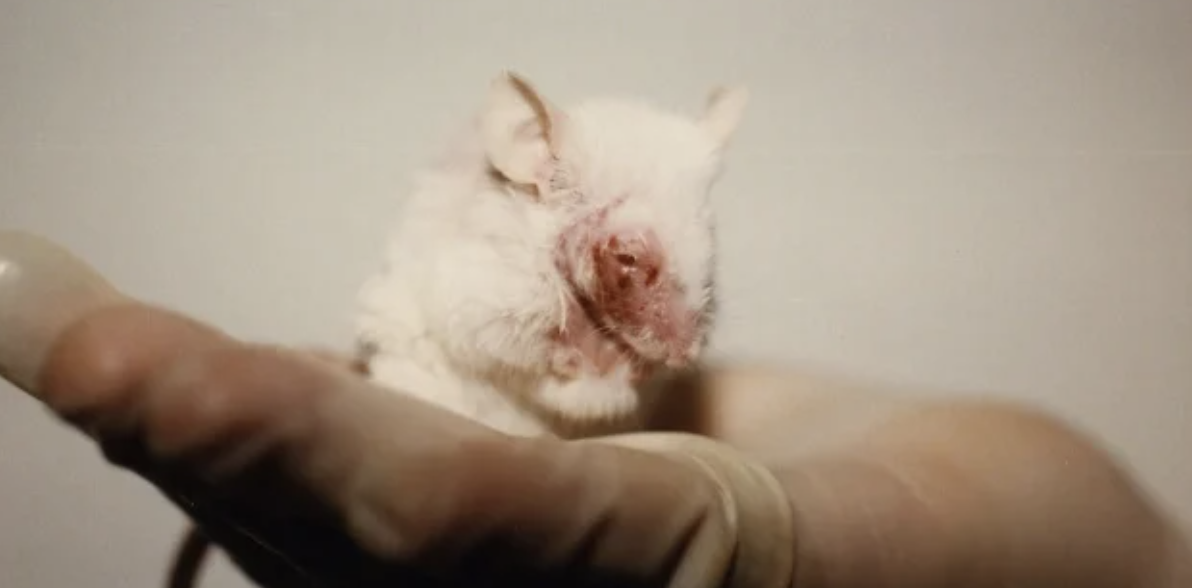
Animals in labs can be force-fed chemicals, injected with experimental drugs, kept in tiny cages with almost nothing to do, and often euthanized when tests end. Sometimes these procedures happen without pain relief.
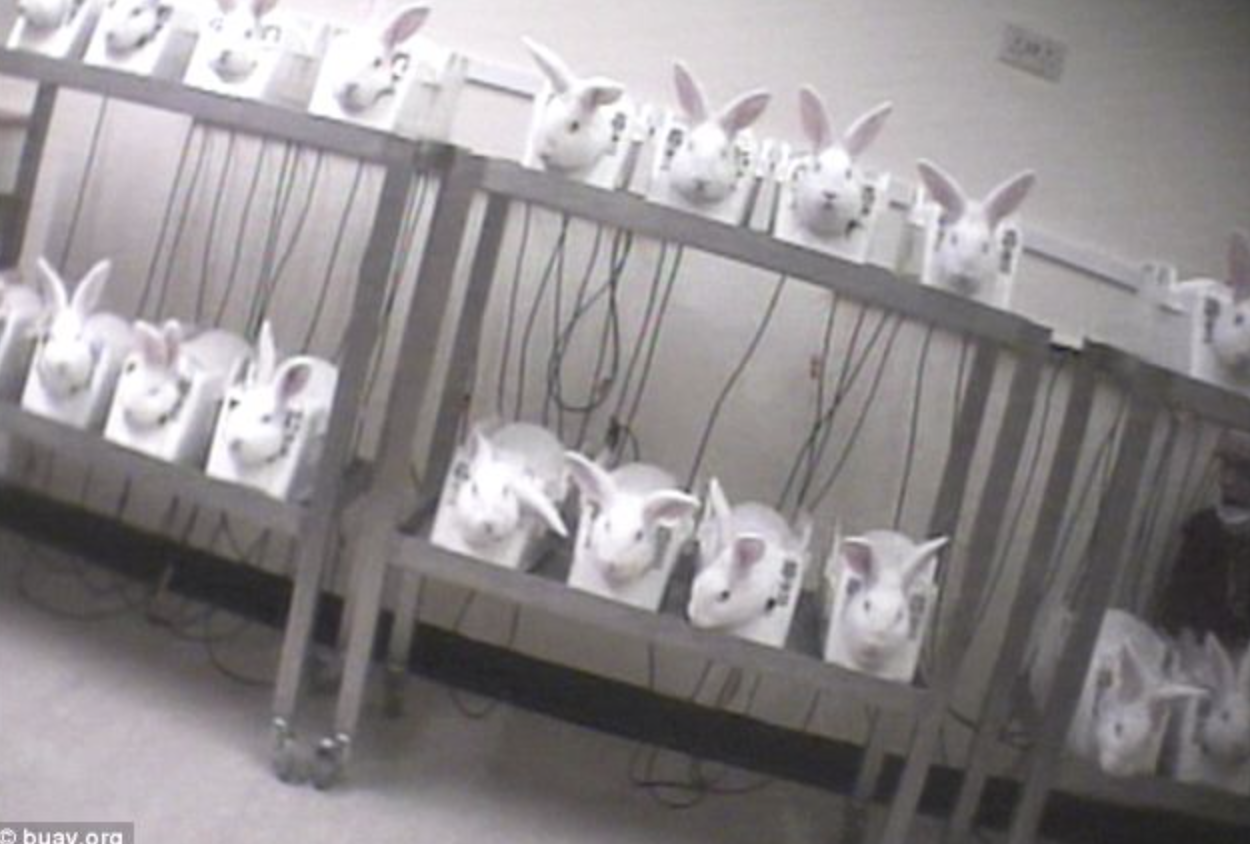
The living conditions for lab animals are often pretty grim: cramped cages, no social interaction, and animals genetically modified to develop painful diseases.
And it is not just dogs and cats that suffer — animals like rats, mice, fish, and hamsters experience pain and distress just as much. These animals are sentient and deserve compassion too. We cannot just overlook their suffering because they are not traditional “pets.”
Additionally, experiments can take months, and it is not just one animal—it’s hundreds or even thousands enduring prolonged suffering. These animals are subjected to repeated procedures that can cause pain, distress, and lasting harm. And despite all that, not every experiment leads to successful or safe results.
So… at what cost? When you consider the sheer number of animals affected, the length and severity of their suffering, and the frequent failures, it forces us to seriously rethink whether this approach is justifiable.
Better Options Are Here
The good news? Science is developing ethical alternatives that don’t rely on animals:
3D human tissue models
Human cell cultures
Computer simulations
Organ-on-a-chip systems
Microdosing studies
Volunteers give informed consent and are often compensated, creating a clear trade-off. Unlike animals, who are forced into experiments with no choice and no benefit, these human participants freely choose to contribute to research. It’s a crucial ethical difference that highlights why moving away from animal testing isn’t just possible. It is necessary.
These methods aren’t just kinder — they can be more accurate and cost-effective.
Singapore and Animal Testing Laws
Singapore has rules overseeing animal research, including the 3Rs principle — Replacement, Reduction, Refinement — but enforcement is mostly internal and transparency is limited. There are about 24 licensed facilities doing animal research here, with animals like rats, mice, fish, rabbits, dogs, pigs, and monkeys. But what exactly happens is not very public.
On the bright side, Singaporean companies and institutions like Revivo BioSystems and A*STAR are developing cruelty-free testing technologies that could change the game.
Globally, things are shifting: the EU banned animal testing for cosmetics in 2013, India and Israel also prohibit it, and the U.S. FDA now accepts some non-animal testing methods.
How You Can Help
Change is not just on governments or companies — it starts with us.
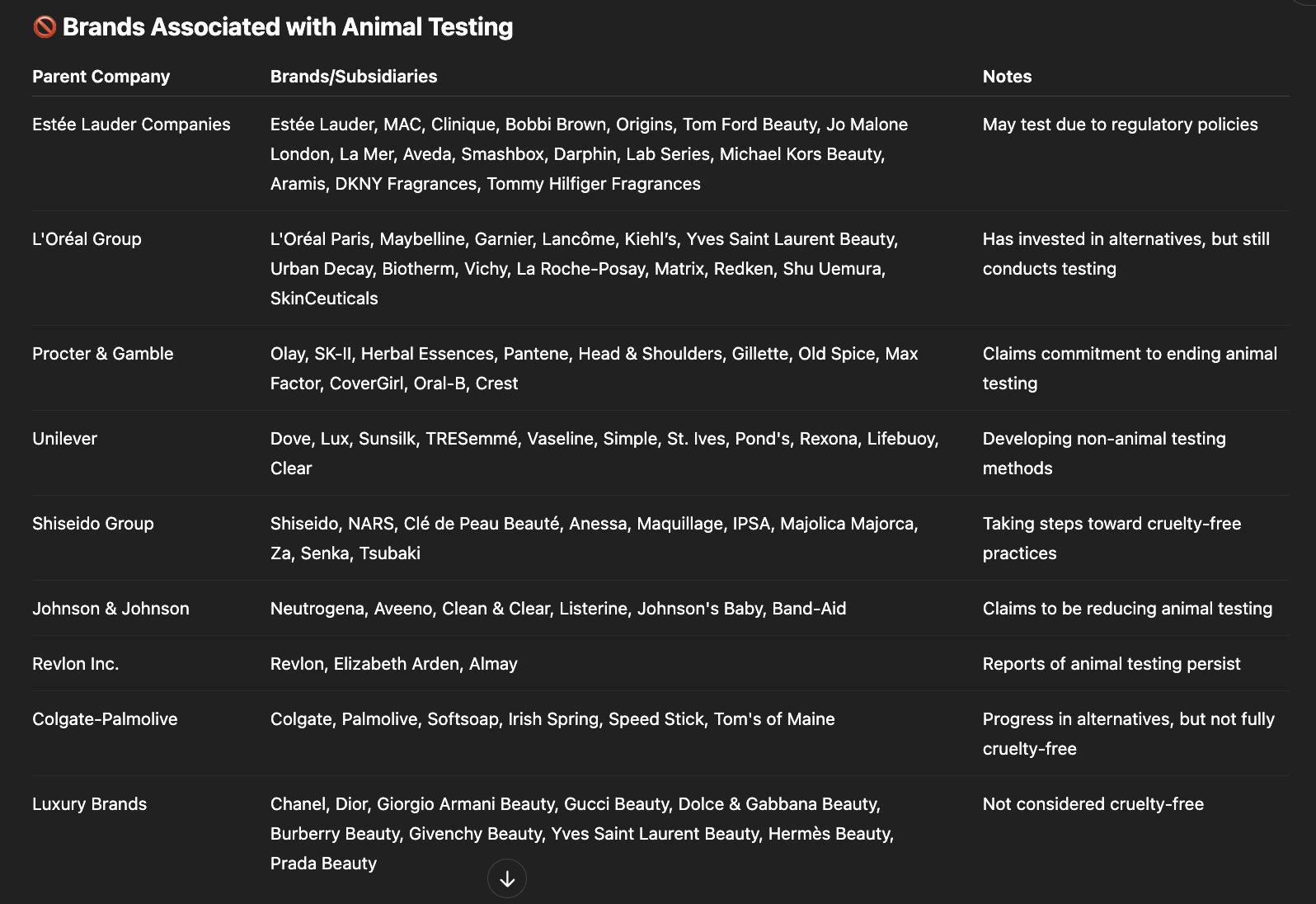
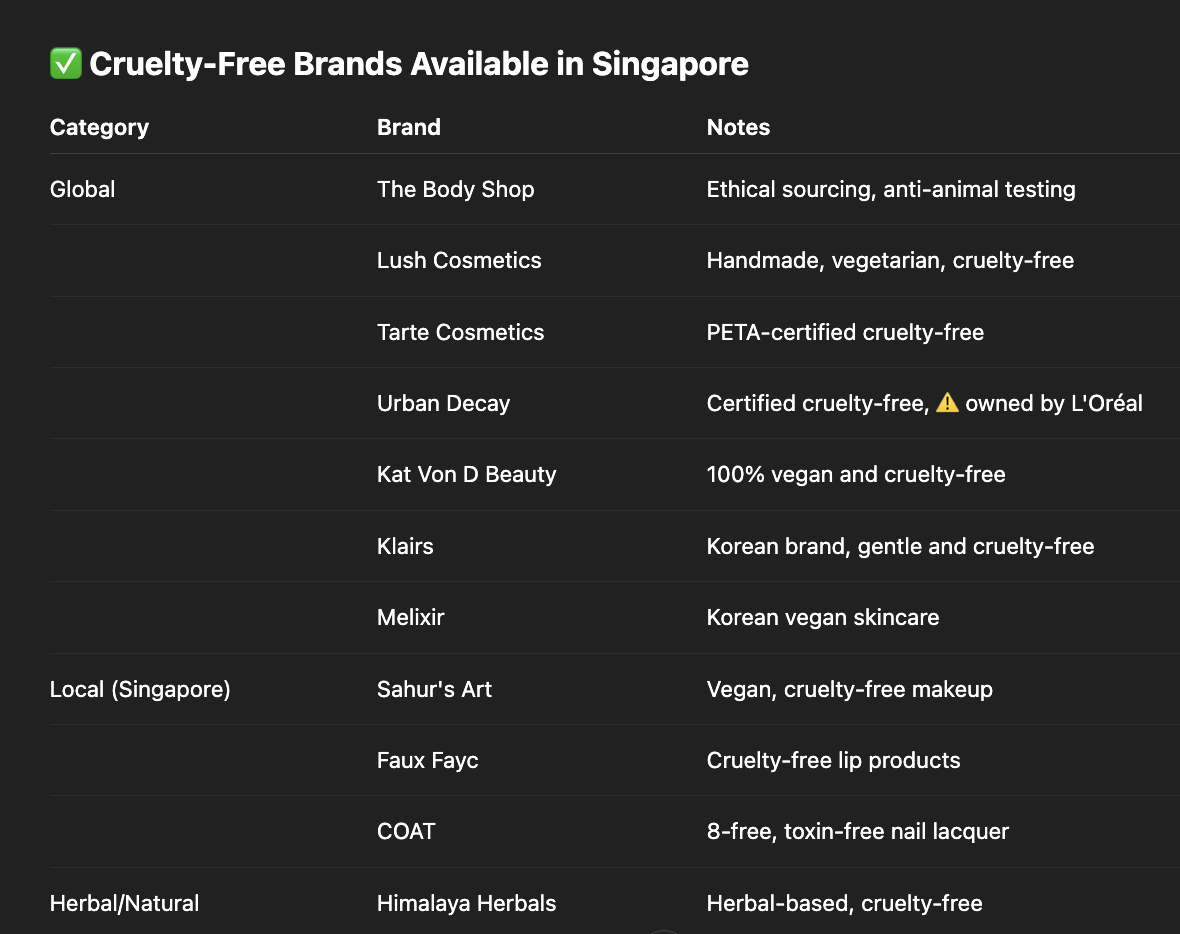
Support cruelty-free brands and boycott companies who stand for animal testing (Use free mobile apps like Cruelty-Free By Leaping Bunny, Bunny Free By PETA or Cruelty Cutter by the Beagle Freedom Project to assist you in this wonderful world)
Join advocacy groups like ACRES, PETA, or Cruelty Free International
Educate others and raise awareness
Final Thoughts
Animal testing is not just a scientific issue, it is a moral one. Every cruelty-free breakthrough makes the old excuses less convincing.
Science’s future should be about innovation, compassion, and responsibility. We all have a role to play in shaping that future, a future where no animal suffers for progress.
Let’s not just rethink animal testing, let’s reimagine science itself.
in collaboration with @themuslimvetnurse
